Month: February 2008

  • What's in a famous last name?

    A note to all three of you who read my blog, 🙂

    I always get a knot in my stomach when I hear people talking about people in the public eye like they know them so well.

    People love to to tell stories about people who come from families that are in the limelight, but do these people really know the person behind the famous last name? Most likely, NO.

    Today, along with many of you, I received the news that Eleanor Mondale’s cancer is back. My head tells me that she will get through this with the same strength she did last time, and my heart is happy that she will have her loving husband Chan and her family by her side.

    When I first met Eleanor, I had heard so many stories about her that I wasn’t sure if we would hit it off or be like oil and water. Well, to say we "hit it off" would be an understatement!

    I knew I would like Eleanor when she scolded me for calling her "Ellie" after our second lunch and made me go back with her to her car and put on something more appropriate to wear before I made a complete idiot out of myself at a charity function.

    Shortly after spending time with another person who was new in my life, Leilani Baker (a makeup artist extraordinariness), it was clear to me that I had met two woman that would change my life forever. After years of so-called friends in my life, I finally experienced real, honest, and true friendship for the first time.

    Let’s face it: we woman can be tougher on each other than we are on our worst enemies.

    To have not one but TWO female friends that are kind, caring, and filled with complete and total unconditional love is a blessing that I thank God for every day. The stories and the adventures that Leilani, Eleanor, and I have shared, and will CONTINUE to share, are so sacred to me that I can’t, in my heart of hearts, come to share those experiences with anyone but my "Two Janes."

    So please, DON’T call me if you are from the media and want a quote to sell papers. This friend of Eleanor is going to respect both the public persona AND the cherished, private person who I call "Farmer Jane."

    I do, however, want to let Eleanor know publicly that I will be happy to shovel up any horse crap if she only promises to take care of herself and get her butt back on the radio. 🙂

    FYI: I am saying that I will help with farm chores for the record so that Eleanor can hold me to it.

    Love ya, cowgirl!!!!

    -Posh Jane 🙂

  • New Group Blog for Foodies: Chef's Table

    In case you haven’t already noticed – we have started a new group
    blog here at the Rake called Chef’s
    Table
    . It isn’t just for chefs, though – it’s for restaurateurs, servers, gourmets,
    gourmands, wine sellers, cheese mongers, etc. – anybody who is an active
    participant in the Twin Cities’ lively food scene.

    It’s a chance for chefs and other foodies to tell diners how to get the most our of their restaurant, or invite them to sign up a special dinner, share photos and stories from their latest gastronomic field trip, weigh in on the latest trends, or sound off on obnoxious customers or pet peeves.

    Anybody can post comments on Chef’s Table, but so far,
    membership is by invitation only. If you would like to participate, drop me a
    line at iggers@rakemag.com, and tell me
    a bit about yourself.

    The most recent post is by Henry Chan, owner of Giapponese Sushi
    in Woodbury – the second installment in a series that gives you the
    down-and-dirty about cheap sushi: "To cut costs, frozen tuna is often used,
    lower in quality with almost no flavor, still safe to eat, at almost half the
    price of good fresh tuna…Tuna, salmon, whitefish, just about every fish is
    now available frozen, trimmed and pre-cut. Hell, I’ve even been approached by
    American fish companies asking if I would be interested in buying pre-made
    frozen ready to eat California and spicy tuna rolls!!
    " To read more, go to the
    blog…

    Niki Stavrou, owner of Victor’s 1959 CafĂ©, 3756 Grand Ave. S., Minneapolis, also put up a post recently, to clear up a common misconception about Cuban cuisine: "Cuban culture
    is certainly spicy; the people, the music, the politics, you name it. But when
    it comes to cooking we leave the hot peppers for other cultures…

    Niki also sent
    out an email recently to customers on the cafĂ©’s email list, suggesting a
    dinner-and-a-movie combination for tonight: "Thought you would like to know that the Walker
    Art Center is showing a Cuban film this Friday night, February 29th at
    7:30pm. It’s called "The Sugar Curtain" and from everything
    I’ve read on it, sounds like it will be a very interesting film.

    "And
    remember, we open at 4:30pm for dinner so why not make it Cuban dinner and a
    Cuban movie? Make your reservations now and mention that you will be
    attending the film – if you arrive by 6:00pm we promise to have you well-fed
    with plenty of time to get to the movie. (I’m even going to try to sneak out so
    I can see it too!)
    ."

    Call the cafe at 612-827-8948 for reservations. To be added to Niki’s email list, send her an email at Cafe1959@aol.com.


  • Letters from Eurydice VI

    We’re into our final two weeks of performances, so rather than give an account of each, I’ll offer thumbnail impressions of some of our performances to date:

    FEb 14, VOA Women’s Correctional Facility (Opening Day)

    The VOA is normally a high-energy audience: lots of commentary and back-talk to and about the actors as the show is being performed. Not today. They are uncharacteristically quiet. Attentive to be sure, but not very responsive. As I watch the women watch the opening scene, a bat-squeak of anxiety starts chirping inside my head: "Is it (are we) boring them?" But I underestimate Sarah Ruhl’s writing. It’s a quieter play than a Shakespeare play, but the language is more accessible. They’re not bored; they’re listening… intently. And by the end, they’re in tears. The show finishes, and the cast lingers in the paying area. The women surround us (well, mostly young heartthrobs Sonja Parks and Marc Halsey), saying thank you, saying this is the first play they ever saw, shaking hands, touching arms, embracing, asking us where else we will be performing, asking us to sign their programs. I wonder at that gesture. It happens a lot in the prisons and shelters, inmates and the homeless asking for signed programs. Why? What do they do with them? Do they help them to remember, to re-imagine the play? At night, in a cell, in a life, perhaps barren of hope, barren of beauty, barren of that which touches or moves them, what might it mean to look at that program and its signatures of strangers who, briefly, were not? To recall the story, not of a distant figure of myth, but a girl like them facing an impossible choice? A story, written in their lifetime, by a woman they will never meet, who nevertheless found a way to speak to them of them. Is it a comfort, an inspiration to have a brief experience of illumination, or another frustration- a glimpse of something beauteous but forever, in their minds if not their lives, out of reach.

    • Is it for all time, or merely a lark?
    • It it the Lido I see, or only Powderhorn Park?
    • Is it a fancy not worth thinking of?
    • Or is it at long last love?

    Feb 19, St. Stephen’s Center
    A church basement shelter in south Minneapolis. Dinner is just finishing up when we arrive. Lots of people eye us warily as we bring in the set and equipment and start clearing away tables and chairs in the cafeteria to make a playing space. It’s a brutally cold night — below zero outside — which may help boost attendance. Cookies and cider are laid out: snacks, a free show, and the heat is on, ladies and gents. This is a public performance. Unlike the prisons, which are closed, anyone can come to performances in public places, and they have gotten so popular that TTT has placed a reservation requirement and a cap on reservations so as not to squeeze out the intended audience, who can get a little intimidated when too many nicely-dressed, obviously not-in-need-of-a-free-meal types start taking seats. Tonight it looks about half and half. The other thing about public performances is people can leave if they’re bored or just have other priorities. Michelle Hensley always warns the acting company not to take it personally when people up and scarper during the big scene you’ve worked yourself into an emotional lather over for the past four weeks. They’ve just got more important things to do.

    That’s true — most of the time. Tonight, however, one man wearing two winter coats watches the first two scenes and then, in the middle of the third, stands and emphatically starts walking to the exit announcing in a VERY loud and disgusted voice, "I do not BELONG HERE!"

    Guess sub-zero temperatures didn’t sound so bad for this soul after all, compared to sitting through some Greek bullshit play done by patronizing mostly white folks who wouldn’t last 12 hours walking in this man’s shoes. However well-intentioned and welcomed we are, I am often reminded of the opening scene, of the classic opening scene of My Man Godfrey, when the ditzy socialites descend on a depression-era Hooverville looking for homeless man as part of a scavenger hunt party entertainment. "What fun! What larks! The poor people, they’re so, I don’t know, so authentic! Let’s take one with us!" I hope our walk-out stuffed his pockets with cookies so his evening isn’t a total loss. I’ve walked out of plays too, but never when the stakes (staying warm, staying fed) were so high. That night that guy showed the courage of his convictions, and while I didn’t want to trade places, I gave him high marks for character. I hope he had a warm place to go for the night, and some hot java with his cookies before bed.


    Feb 20, Dorothy Day Center

    D-DAY. How apt. When TTT plays Dorothy Day there is always a definite sense of launching yourself up against a hostile beachhead. D-Day is huge — large enough for two full-court basketball games. The biggest venue TTT plays, as well as the most boisterous, un-acoustic, frenetic, and just plain LOUD! And yet, I have a secret fondness for D-Day. For one thing, it was the site of my big Measure For Measure epiphany moment nicely accounted in last year’s TCG/American Theatre Magazine profile article. Mostly, though, D-Day has always represented for me the Broadway of any TTT tour. If we can make it here, we can make it anywhere. And today our work is cut out for us. The good news is that there are a lot of well-wishers and friends in the audience. Nobody gets turned away from a D-Day performance. Apart from the chairs set up in the Eurydice stadium-style seating patters, there are abundant tables and chairs everywhere, most filled with people waiting, not for our show, but see the man about food stamps, get on line for the evening meal, or just keep warm. The bad news is that the room is never still. People are always moving in and out, talking, shouting, getting on with the legitimate warp and woof of their lives, and they ain’t got time for any goddamn plays, thanks all the same.

    In Shakespeare, the energy of the language can push against this background cacophony — but Eurydice is a quiet, contemplative piece, and the competition for the audience’s attention is going to be brutal. Oh, more good news: there’s Graydon Royce, the Star-Tribune critic, settling into his seat to see our play in its most pitiless venue. Swell. In his review of this performance, Graydon remarked he was puzzled, "why Ten Thousand Things thought this delicate and intimate play would do well in a raucous community center, with a constantly migrating audience whose interest level waxed and waned." It’s frustrating for me when critics pose those questions in print. I mean, we were all right there. If he had thought to ask me, I would have told him that nobody plans for any play to do well at D-Day. If TTT picked its plays by their suitability for D-Day all we’d do were endless revivals of Hellzapoppin and Jesus Christ Superstar. In the end it doesn’t make the slightest difference what you do at D-Day. It’s like performing atop erupting Mt. St. Helens or in the eye of a cyclone — no time for subtleties, me hearties, boost your energy, volume, smack those end consonants, and hope we’re all still alive at the end of the day.

    It’s tough going. There’s one man who is actually quite excited about the show and who can’t help dancing about, mimicking the action, much to the distraction and continued amusement of the rest of the audience during some of the quieter moments between Orpheus and Eurydice. People help themselves to the noisy vending machines and shout greetings and instructions across the room. But we have our moments. Leif Jurgensen’s tricycle turn as Lord of the Underworld takes the native hilarity of the environment and channels it, Aikido-like, into a response that builds laugh upon laugh. Lisa Clair’s delightful musical vamping of Orpheus quickly commands the attention of every man in the room between 8 and 80. But some quiet moments are able to compel attention too. Building the string house settles the crowd into an uneasy quiet (well, most people like to gawk at any construction site and see what it’s going to turn into). The father’s river directions speech also seems to momentarily quiet the room, if only because I try to look as many people in the eye as I can while I’m talking, giving the directions directly to them in a way that suggests that they better write this stuff down or at least pay attention!

    The play ends on its poignant, quiet note, we stand to some smattered applause and whatever pause the room had taken to accommodate our play is swept away by more pressing matters — getting in line for dinner, straightening out a landlord-tenant issue, and trying to grab an empty laundry machine to do your load of colors. Even so, there are a few hardy souls, a few survivors who, despite the urgent tasks of simply getting through the day waiting upon them, take the time to step up moist-eyed to say, "Thanks, it was wonderful." And it was, although everyone in the cast could use a stiff drink after this show to strip our sleeves, show our wounds, and share our war stories. We reached some few, some happy few that afternoon, and it felt great.

    And that, dear readers is why TTT celebrates D-Day.

    Next: Eurydice on the Rez…

  • Any Old Business?

    How it is that I…how is it…or, rather, why it is that I…that I seem to
    keep…or, really, that I do keep, that I keep ending up…that every
    single night I look at the clock, I look at the clock and it’s two o’clock in
    the morning, it’s three o’clock in the morning and I…I keep ending up at
    three o’clock in the morning, I keep ending up sitting here with…I don’t
    know, I keep ending up sitting here with all this shit, surrounded by
    all this shit? Night after night I’m sitting here, I’m sitting here night after
    night on the floor with my back against these racks of records, surrounded
    by these shelves full of shit, shelves full of plastic,
    anthropomorphized potatoes and carrots and hamburgers, all of them with
    hats on their heads and pipes in their mouths and their arms paralyzed in an
    embracing gesture that I often find disturbing.

    I’m sitting here with my legs crossed and my back up against all this
    shit…I’m sitting here in this ridiculous and uncomfortable position, night
    after night, delivering incoherent monologues to the beleaguered animal that shares my
    home…and what the fuck is this I’m listening to? Honest to God, explain to me
    if you can why I am sitting here like this, trying to read about the Donner
    party and poor Lewis Keseberg, who was driven by madness and the most desperate
    of circumstances to eat a woman named Mrs. Murphy. "The flesh of starved
    beings contains little nutriment," the cannibal Keseberg assures me.
    "It is like feeding straw to horses. I cannot describe the unutterable
    repugnance with which I tasted the first mouthful of flesh. There is an
    instinct in our nature that revolts at the thought of touching, much less
    eating, a corpse….It has been told that I boasted of my shame –said that I
    enjoyed this horrid food, and that I remarked that human flesh was more
    palatable than California beef. This is a falsehood. It is a horrible,
    revolting falsehood. This food was never otherwise than loathsome, insipid, and
    disgusting." Explain to me why I would continue to read as this poor man
    was asked by his interrogator, Did you boil the flesh? And as he
    responded, "Yes! But to go into the details –to relate the minutiae– is
    too agonizing! I cannot do it! Imagination can supply these. The necessary
    mutilation of the bodies of those who had been my friends rendered the
    ghastliness of my situation more frightful."

    I mean, seriously, holy shit, every fucking night….What is this? Why am I
    sitting here listening to…George Crumb? Is that what the hell this is? Or Morton Feldman? And at some point –this for certain– listening to Lou
    Reed, the idiot prince of rock and roll, listening to that jackass Lou Reed,
    listening to this lunatic Lou Reed reduce Edgar Allan Poe to the most wrenching
    and painful sort of comedy. Are there even one thousand other misguided people
    on the planet who have paid to be thusly abused? Please assure me there are
    not, even as it gives me considerable anguish to know that there almost
    certainly are. But what in God’s name is wrong with me that I would pay
    good money for a CD on which Lou Reed makes a muddled mockery of "The
    Raven"?

    Look, honest to God, this is the fucking truth: No man
    should ever find himself sitting hunched on the
    floor with a pen paralyzed in his fingers listening to Lou Reed’s
    “The Raven” at two o’clock in the morning. No man should ever eat red licorice
    and corn chips for dinner –not at three a.m. Not ever. No man should ever sit
    at four a.m. raking the soiled carpet with his fingers and building
    bewildering piles of lint and scruff and dog dander and pubic hair and chips of
    indeterminate origin. No man should ever put these piles in an ashtray and burn them. No man should ever write such words as those that
    preceded the words ‘No man should ever write such words….’ No man should ever
    spend so many hours sitting in one dank apartment that the liquor of his own
    stench has become intoxicating and the crawling of the hours has reduced him to
    a savage who cannot remember his last truly conscious thought. No man should
    ever sit studying a diagram of the arteries of the brain as if it were a
    satellite photo of a country that no longer exists. No man should ever look up
    from his hunched stupor at five a.m. and find himself gazing into the clearly
    terrified face of an elderly paperboy framed in the window of his front door.

  • Myths, Legends, and Revolution

    THEATER & PERFORMANCE
    Eurydice

    Sarah Ruhl, Sarah Ruhl, Sarah Ruhl. We’ve been writing up, and seeing,
    our fill of plays by this hotshot. Still, we’d be fools not to note the
    occasion of the regional premiere of Eurydice, the play that made Ruhl
    a certified superstar (thanks to last summer’s extended Off-Broadway
    run). This production marks Ten Thousand Things’ first tangle with the
    playwright, and their choice of this spirited, fairly modern take on
    the myth of Orpheus and Eurydice (retold from the young woman’s
    perspective) should fit nicely with the company’s visually spare yet
    emotionally direct aesthetic—something it more often applies to
    Shakespeare and the ancient Greek playwrights. Among a strong, all-star
    cast, the key players include Sonja Parks, a local actress who performs
    with remarkable force in the title role, and the stately and
    heavens-to-Betsy-he’s-handsome Steve Hendrickson as Eurydice’s father. —Christy DeSmith

    Friday-Sunday at 8 p.m., Ten Thousand Things at Open Book, 1011 Washington Ave. S., Minneapolis;

    612-203-9502; $20.


    You’re My Favorite Kind of Pretty

    Recent conversations with Jon Ferguson,
    that rising star of the local theater scene, revealed a topical theme:
    The man is headlong in love. Since he and his partner, performer Megan Odell of Live Action Set,
    recently welcomed a baby boy into the world, Ferguson—formerly an
    itinerant, couch-surfing bachelor—finds himself an unlikely inhabitant
    of a state of domestic bliss. His latest show, fittingly, explores the
    gradations of romantic relationships: from love at first sight to (with
    any luck) a committed coupling. A cast of fine, crush-worthy
    collaborators lent their own romantic histories to the project,
    including Jennifer Davis,
    whose vivid paintings Ferguson finds distinctly feminine and beautiful,
    and Sara Richardson, a stellar (and dismayingly under-used) performer
    who somehow manages to be both physically lovely and goofy as all
    get-out. —Christy DeSmith

    Friday and Saturday at 8 p.m., Sunday at 7 p.m., Southern Theater, 1420 Washington Ave. S., Minneapolis; 612-340-1725; $18.

    FILM
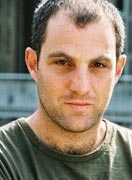
    The Band’s Visit

    "Once, not long ago, a small Egyptian police band arrived in Israel. Not many people remember this. It wasn’t that
    important." So begins The Band’s Visit, an understated little film from Israeli
    director Eran Kolirin. When no one is at the airport to meet the eponymous
    band, the musicians, dressed in baby blue police uniforms and lugging their
    instruments through the village streets, are forced to split up and crash at
    the homes of the bemused inhabitants. But like many unimportant moments in our
    lives, The Band’s Visit is really about those quiet minutes spent connecting
    with fellow human beings, sharing observations, memories, pain, suffering, and,
    of course, love-moments we remember forever. There is little to say about this
    beautiful picture other than that it succeeds marvelously at making us feel
    profoundly happy, a feat that eludes almost every movie out there. —Peter Schilling

    Opens Friday at Edina Cinema, 3911 W. 50th
    St., Edina; 651-649-4416.

    See Kate Leibfried’s review of The Band’s Visit, and Peter Schilling’s interview with director Eran Kolirin.


    4 Months, 3 Weeks, 2 Days

    Bruno Dumont’s "Romanian abortion movie" — 4 Months, 3 Weeks, 2 Days — documents a day in the life of two college roommates. Gabita is the
    underprepared pregnant one and Otilia is her friend who, it turns out,
    is willing to do almost anything to help her. The girls prepare for the
    illegal abortion like they would an exam – with a sort of dignified
    verve. They overcome some small setbacks only to be faced with some
    much bigger ones. The overcome those, then a short diversion and then
    the procedure and the clean up. Finally they are left to face the
    reality of what they just did. This is where we leave the characters
    and their struggle in the film’s beautiful final moment. In strictly
    real time we experience these events and the transformations that they
    cause, and this is where the power of the story rises above any
    particular cinematic aesthetic. —from a review by Christopher Hontos

    Opens Friday at Edina Cinema, 3911 W. 50th
    St., Edina; 651-649-4416.

    MUSIC
    Holy Rollers

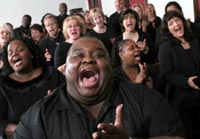
    Do it for God, or do it for the vocals. The truth is, contemporary urban gospel is more about rhythm, groove, and vocals, than about Christianity; but you just can’t deny the spirit moving — whatever spirit that may be. It seems to me, we can all stand to let our spirits soar a little, especially at the end of one of the coldest, harshest, more depressing months of the year. Besides, we just don’t get enough gospel in the Twin Cities, so we best enjoy what we can. This evening, Robert Robinson leads more than 100 soulful voices in a celebration of "music and spirituality through the rich tradition of African American
    religious music." Don’t miss this Twin Cities Community Gospel Choir concert.

    Saturday at 7:30 p.m., The O’Shaughnessy, College of St. Catherine, 2004 Randolph Ave., St. Paul; 651-690-6700; $20, children & seniors $15, students $10.

    And on Sunday, catch Atlas Sound, White Rainbow, and Valet at the Triple Rock Social Club.

    SPECIAL EVENT
    The African Diaspora in the Americas

    Tomorrow you have a rare opportunity to celebrate the African Diaspora with people from all over the Americas — and to learn about the decisive role people of African origin have played in the revolutionary process. The event begins at 1 p.m., with keynote speaker JesĂşs ‘Chucho’ GarcĂ­a — founder and leader of the Afro-Venezuelan Network — as he shares his knowledge of the impacts of globalization and militarism on Latin America. Then, join panel discussions (2:30 to 5:30 pm) with Rose Brewer (United States), Raudemar Hernández (Cuba), Nekima Levy-Pounds (United States), Ruben Joanem (HaitĂ­), Danyika Howell (United States), Jorge Veloz (Venezuela), Lauretta Dawolo (Liberia), Marino CĂłrdova (Colombia), Karla Smith (United States), and Lester Nurse (Puerto Rico). This fabulous intellectual stimulation will be followed by a dinner and artistic performances (5:30 – 9 p.m.) by MarĂ­a Isa (Puerto Rico), Eliezer Santos Freitas (Brazil), Judith PĂ©rez (Venezuela, Yrma Machado (Venezuela), and Karma (United States).

    Saturday from 1-9 p.m., Phyllis Wheatley Community Center, 1301 10th Ave. N., Minneapolis; 612-730-0087; free.

  • Sushi: The Naked Truth, part two.

    Bandwagons and gold diggers. Once something’s hot and mainstream it will most likely get exploited. As we all know, sushi is hot, and now it’s come to that stage.

    How can we make it faster, cheaper, and offer more?! This is the general direction for most new sushi bars.

    To cut costs, frozen tuna is often used, lower in quality with almost no flavor, still safe to eat, at almost half the price of good fresh tuna. The grace of a skilled sushi chef with his/her’s knife is also a dying breed. Tuna, salmon, white fish, just about every fish is now available frozen, trimmed, and pre-cut. hell I’ve even been approached by American fish companies asking if I would be interested in buying pre-made frozen ready to eat California and spicy tuna rolls!!

    Sauces, stocks, soups are also offered up in pre-made packaging. When I learned sushi, unagi (eel) sauce was one of the sauces I was taught. It is a pain in the ass to make as it has to be watched and takes up to four days to make, and with one small mistake it would burn and you would have to start over.

    Simple mathematics: all you can eat sushi is not the ideal place you want to go for fresh sushi. Yes, it’s cheap, but so is the quality. Good fresh tuna wholesale is around $15 a pound, plus waste from trimming. So if you go to an all you can eat place and it’s $20 bucks, you are getting cheap frozen fish. Frozen tuna that is safe to eat raw can be found for about $7 to $9 a pound.

    Along with the fish, so many other factors also come in play. The rice. Good sushi restaurants will use a good medium to short grain rice that’s about $30 to $50 for a fifty pound bag — compared to lower end rice that is around $15 to $20 for a fifty pound bag.

    Bottom line, with sushi you get what you pay for..

  • The Joy of Insignificance

    Poor Eran Kolirin. When I spoke with the director of The Band’s Visit a few weeks ago, he had been traveling so much that his jet lag kept him from even an hour’s sleep. Then, just minutes before this interview, he managed to whack his head against the door frame of the car that brought him to the Nicollet Island Inn. Despite all this, he was a gracious interviewee.

    I loved this movie. The Band’s Visit is funny, touching, and filled with performances so subtle and sweet, it makes you swoon. When I emerged from the theater, I ached to spend a quiet evening over tea with these characters, talking about nothing, and talking about everything.

    The Rake: The film opens with "Once, not long ago, a small Egyptian police band got lost in Israel. Not many people remember this. It wasn’t that important." Why is the "unimportant"… important?

    Eran Kolirin: Some of this came in this book by Ali Salem, famous Egyptian playwright, the only one who ever came to Israel. He wrote this lovely book about his trip called Journey Into Israel. At the beginning of his book he describes how he lost his way in his car when he came from being a bit stressed and scared from visiting Israel for the first time. Instead of getting to Tel Aviv he got to Netanya. Not a small town like the movie, but it wasn’t where he was heading. So he has to stay there, but he describes a conversation between himself and this girl at the front desk of his hotel. And this tension between this very big premise of history—an Egyptian writer in Israel—and suddenly life throws you into something unexpected and unintentional. The tension between the big story in the background and the small story out front, I found very interesting.

    Rake: The Band’s Visit reflects a rich understanding of every character, even the smallest, most seemingly insignificant people. Like the man on the phone. Are any of these people from your life?

    Kolirin: You have to find yourself in every character that you write. When my wife and I lived in an apartment in Tel Aviv, there was this guy sitting in his car waiting for hours and hours. We used to call him "The Waiter", because that’s all he would do. Finally, one day I saw him in his car passionately kissing this woman. I think this guy was just waiting for this woman. He waited and waited and something finally happened.

    Rake: Tell me how you ended up composing this film. Did you just read Salem’s book and think about a being lost…

    Kolirin: The process is always this: First you have this Egyptian band. Then you ask why? Why is this important? Then I can go back and think of my influences, the Egyptian films that I used to enjoy as a child, which influenced me. In fact, so much that I originally wanted Omar Sharif in the starring role. But your first impulse just comes to you. Then you analyze it backwards.

    Rake: There’s a political undertone, but a distinct lack of religious undertone. None of the Egyptians, for instance, are ever seen stopping to pray. Was this a conscious effort on your part?

    Kolirin: That’s an interesting question. In my life I’m very religious in certain ways, but not with the exterior stuff. There’s something religious in the movie in you insist on looking at it this way—but not in the way the characters act. The conflict is religious, but on a very big scale, but not when a Muslim meets a Jew, not on this level.

    Rake: There seems to be a wonderful spontaneity in the film. Like the scene in the restaurant, it felt very real…

    Kolirin: Well, it wasn’t spontaneous, it was completely controlled. I don’t know how to improvise. It’s funny that you say that because it’s real—I hope it’s real!—but actually it’s very unrealistic. It’s not naturalistic, it’s very slow acting with precise gestures. Like the scene in the rollerskating rink, with dramatic gestures. But sometimes you have to be very unreal to get something real.

    Rake: The Band’s Visit seems to be a call for peace, though a very subtle one–it certainly doesn’t hammer you over the head with a message. But it does focus on the lovely, small things that unite us–food, conversation, music. And if you look at that dinner table scene, with the family staring down the musicians and arguing among themselves, it even suggests that our family strife and our squabbles are the same.

    Kolirin: I don’t go it thinking I have this message of peace. The movie likes these characters and is OK with them. That’s something peaceful. Just to let people have the time to think for themselves, to communicate with each other, to share emotion with each other is necessary.

    Rake: In an interview with Filmmaker Magazine you said that you don’t think peace is achievable in the Middle East. And yet the film suggests otherwise.

    Kolirin: Oh, yeah [Laughs]. If you ask me on a realistic level if I look at what’s happening and do I have any clever solution, unfortunately all I see is bloodshed. Again, there’s reality and there’s the movie that you make, which can yearn for some other kind of existence. That doesn’t mean that in real life if I observe our politics I think it’s very bad.

    Rake: I read that there was hope this would be shown at an Egyptian film festival…

    Kolirin: No. There’s no way it can be shown in Egypt.

    Rake: At all? Anywhere in the country?

    Kolirin: Formally, no. There’s a ban against any kind of cultural relationship with Israel. And it was accepted at the Abu Dhabi Film Festival, but it was rejected at the last minute due to political pressure. It’s shown in film festivals where I’ve met many audience members from the Arab world. But not formally in any Arab state. It’s a shame, really.

  • A Dearth of Hookers and Blow

    It has become quite obvious in recent days that loyal
    service just isn’t rewarded within the legislature anymore. As recently as a
    handful of years ago, long-tenured legislators and officials would be shown the
    public’s appreciation through pompous public ceremonies and the occasional
    backroom smorgasbord of hookers and blow. But Lindsey
    Lohan’s rates
    have gone through the roof, and tight budgets have reduced the
    budget for recreational pharmaceuticals in the Senate to almost nil. As a
    result, the legislature hasn’t put together a proper farewell for our very own
    soon-to-be departing state transportation commissioner slash
    lieutenant-governor – Carol Molnau.

    Since Tim Pawlenty’s election in 2002, Molnau has tirelessly
    served our state as a triple threat – lieutenant governor, transportation
    commissioner and national arm
    wrestling champion
    . Her self-proclaimed transportation expertise, which has
    been amply demonstrated by such deftly executed projects as the Wakota
    Bridge project
    , and her masterful handling of the 35W/62 interchange project,
    where her requirement that all contractors bidding on the project pay
    construction costs up front and then be reimbursed by the state resulted in no
    bidders coming forward to take the work, stalling the project and saving the
    state millions in 2006.

    Of course, Molnau has had her detractors. Some call her
    leadership asinine, accusing her of being an unqualified bumpkin who managed to
    drive Mn/DOT into the ditch like a farm girl drunk on lust and moonshine
    attempting to make it to Sartel on her daddy’s tractor.
    Unfortunately, the tractor in question vibrates quite distractingly once it
    hits 5 miles per hour, making it hard for our heroine to keep her eyes on the
    road. Of course, it doesn’t help that the roads the tractor has to travel on,
    in the words of several legislators, are "crumbling," or that the process for
    awarding the hundreds of millions of dollars at stake for the new 35W bridge
    was approximately as comprehensible as Britney Spears’ thought
    processes
    . In the meantime, she’ll just need to rev that fucker up and jump
    the gap in true Duke boys
    fashion
    . And if the tractor won’t cut it, maybe she can borrow one of those
    brand new F-150s
    Flatiron imported from Colorado for the project.

    Regardless, Molnau is most likely on her way out today, so
    why focus on the pain of the past when we can build a brighter future? The king
    is dead, long live the king, and all that, right? Well, in order to build that
    brighter future, we’ll need a new transportation commissioner. Someone who can
    unite, rather than divide. Someone who can bring hope to all – from the
    unwashed masses on the 5 to the Chaska housewife deftly maneuvering her
    lumbering Expedition from pothole to pothole.

    And who would my recommendation be for this august post,
    assuming Molnau goes the way of the nigh-mythical Yecki? Who could be our
    beacon, our ray of hope that will bring happiness and My Little Pony back to
    this great state?

    Laurie Coleman

    Mrs. Coleman would be the ideal choice to resurrect our
    transportation infrastructure from the blasted,
    post-apocalyptic landscape
    we’re greeted with on a daily basis. She learned
    urban renewal from Norm Coleman – a man who has played both sides of the aisle
    in his political career with grace and aplomb, not to mention a certain amount
    of opportunism. She can sell
    ideas
    in ways that Carol Molnau never dreamed. This former runway model has
    already convinced me to install a Blo & Go, though I was under the
    impression it offered an entirely different feature set that would have more utility for today’s man on the go. I’ve
    even heard that, in preparation for the call from Gov. Pawlenty, she has
    devised a way to monetize Minnesota’s surplus of icy Scandinavian blondes, a
    resource our great state is known for. According to Coleman’s projections, this
    new export could likely negate the need for the recently passed gas tax.

    Of course, it doesn’t hurt that she’s hot. We could use a little eye-candy to distract us from the politicking and rampant idiocy. Besides, did not
    Keats say, "Beauty is truth, truth beauty,-that is all ye know on earth, and
    all ye need to know"? Which, after taking a spin through the photos
    of our legislators
    , goes a long way toward explaining why truth comes at
    such a premium up at the capitol these days.

  • All Truth Passes through Three Stages

    THEATER & PERFORMANCE
    The Language of Love

    After weeks of rehearsals and rewrites — and even blogging for us in our Just Passing Through blog — local playwright Aditi Kapil is finally debuting two of her works this evening. The first, Love Person, directed by Risa Brainin, isn’t your ordinary love story — about physical attraction, social structure, and sexual orientation — but rather a love story about language and communication. "I was researching Sanskrit," writes Kapil in her February 5th blog post, "and it struck me that there is a similarity between
    the two
    languages. Something about the sentence structure, and how direct they
    are, straightforward yet poetic. And I began to wonder if it is
    possible for two people to
    fall in love on the basis of language alone. Because they understand
    each other in some deep way that for instance English speakers can’t.
    And how interesting it would be if those two people were a Deaf lesbian
    and an isolated Sanskrit professor. 20 some drafts later here we are,
    gearing up for the world premiere." Don’t miss out on this beautiful "language-laden love mystery."

    7:30 p.m., Mixed Blood Theater, 1501 South Fourth St., Minneapolis; 612-338-0937; $10, but be sure to check out our special Rake reader offer.

    MORE THEATER & PERFORMANCE
    A Circus about Water

    In the Heart of the Beast Puppet Theater
    always has something interesting, creative, and colorful to offer. So
    give them a script by Aditi Kapil to work with, and
    they’re bound to make magic — magic out of magic. Sound good? As always
    — though Heart of the Beast never fails to prove that puppts aren’t
    just for kids — they serve up a nice social message as well. The
    subject: water. Learn about public water works, the Mississippi
    watershed, stewardship of our water commons, and the bottled water
    industry (the evil water bottle industry — I cry when I take out my
    recycling and see all those nasty water bottles). But this is no boring
    little lecture; Beneath the Surface is an all-out puppet extravaganza, in full Heart of the Beast style. "I love this show;
    it’s a circus about water," wrote Kapil in our Just Passing Through blog after attending a rehearsal a
    couple weeks ago "Man, were they funny! No, wait, this is what I
    actually love about
    puppeteers! I may have written the script, I may know exactly where
    they’re headed, but their minds just work differently from most people,
    and they take me by surprise and crack me up every time!"

    7:30 p.m., In the Heart of the Beast Puppet and Mask Theatre, 1500 East Lake St., Minneapolis; 612-721-2535; pay what you can.

    Peace Crimes

    In the early ’70s, as the Vietnam War drew an
    increasingly high death toll, eight Minnesotans raided area draft
    offices to destroy draft cards and spare their fellow Minnesotans from
    the horrors of what they knew to be an unjust war. Dubbed the
    "Minnesota Eight" by the local press, the protesters were
    nabbed by the FBI, tried and convicted for conspiracy against their
    country, and locked up in a federal prison. Now, several decades later,
    the Minnesota History Theatre, the Playwrights’ Center, and the
    University Theatre Department have come together to bring their amazing
    story to the stage.

    7:30 p.m., History Theater,
    Rarig Center, 330 21st Ave. S., Minneapolis;

    $25.

    BOOKS & AUTHORS
    Charles Baxter

    Charles Baxter,
    whom we’re happy to once again claim as a local (he recently returned
    from a long exile in Ann Arbor) has been at it for twenty-five years
    now, and his body of work—which includes novels, short stories, poetry,
    and essays—has gained both a national reputation and a cult following.
    His novel The Feast of Love
    was a National Book Award nominee and was recently made into a film.
    Baxter’s teaching at the University of Minnesota these days, but he
    keeps turning out books (he’s purportedly an insomniac), and his
    latest, The Soul Thief, involves a graduate student wrestling with the realization that he may not be who he thinks he is. Or something like that. —Brad Zellar

    7-8 p.m., MinneapolisCentral Library, 300 Nicollet Mall, Minneapolis; 612-630-6174.


  • Open Thread: Back In the Bucket vs. Toronto

    Game #56, Road Game #26: Minnesota 85, Toronto 107

    Season Record: 12-44

    Well the Foo Fighters were great until they strung a trio of their pop hits together at the encore–the hard rockers were their metier, and the acoustic set, while solid, simply disrupted their stride and made it difficult to settle back into that raging sweet spot when they returned. Serj Tankian (lead singer of System of a Down) was as daft and operatic on his own as he was with System, and Against Me! was a killer opening act churning for only half a house.

    Uh, I was at Target Center tonight and the Wolves weren’t. Went to the concert with my son. Sorry to be obnoxiously glib up top. Was going to tape the game but I’m too swamped to guarantee a worthwhile analysis so, once again, the floor is open.

    I did watch the first 1 and a half quarters, saw Foye’s boomlet of points that contributed to the quick start. I also note that Bosh went off for 28 a game after Boozer’s 34–slippage for Jefferson? Frankly, I didn’t think Jefferson played that badly on D vs. Boozer. And watching Bosh nail that well-guarded trey as the first quarter was ending was an omen that even good defense wasn’t going to stop him tonight.

    But I wasn’t around for it so instead I’ll prompt with leading questions:

    Shaddy five more attempts than any other Timberwolf, including 1-9 from trey territory. Was he ball hogging or trying to get the Wolves back in the game in a hurry?

    Jefferson was 9-12 and Foye 7-10. I remember hearing Hanny say Foye had hit his first five shots. So why did he and Jefferson stop shooting? Too judicious? Good Raptor double teams? Other players dominating the ball? Bad pt guard play from Bassy?

    Five turnovers for Craig Smith in less than 17 minutes? What’s up?

    I see the Wolves forced only 6 turnovers after getting 24 vs Utah the night before? Was Wittman right to call out the ballclub? Did they lie down in the second half? As Toronto began to open up a little lead in the second just as I was turning off the set, it still wouldn’t have surprised me to have seen a close game result–they weren’t playing that badly. How and why did it crumble?

    Or just give me your own take.