Month: August 2005

  • Highly Targeted

    As promised, though overdue– our assessment of the “controversial” All-Target issue of the New Yorker: Big deal.

    No, that’s not exactly right. In fact, we’d like to see more of this sort of thing. Given the economy of the last four years, no one deserves a vacation more than magazine ad sales executives, and we stand by our earlier uninformed impressions.

    Also, we direct you to some pretty funny riffing on the subject over at MNSpeak. Such clever folks over there!

    This has nothing to do with feeling a certain amount of secret pride for having poached our own small portion of glory from this ephemeral meta-media goodie…

  • The Gift That Keeps Giving

    It was a surprise to come back from vacation to hear that Village Voice and New Times may be well on the way to a merger. You may remember as I do that it was someone’s unenviable job to make Village Voice Media properties profitable enough to justify the significant investment it had required by the capitans of capital venture when Leonard Stern couldn’t interest his children in continuing the family business. The odds seemed long for a couple of reasons–not the least of which was the tension at the core of the business between making money and casting a jaundiced eye upon all who make money–nowhere more of a destructive/creative force than at the company’s namesake paper. But creative tension does not necessarily result in creative change.

    New Times and Village Voice have been nothing if not persistent. In other words, “innovative” is not a word I would use for most of the papers those companies own and operate. The old-guard alt-weekly world has stayed in the same old trenches that were first dug in the fifties and sixties, and then paved in the eighties and nineties. It’s a necessary front, and I’m glad someone is occupying the watch while the rest of us play around at other forms of “entertainment.” Indeed, you might say that alt-weeklies suffer the opposite problem of the dailies–they have not innovated enough, not made enough inviting gestures to their readers, continued expecting the mountain of readership to come to Mohammed on the masthead.

    Someone has to be doing this necessary work– the problem is, no one has to read it. So the alt-weekly’s self-appointed task of comforting the afflicted and afflicting the blah blah blah (and also continuing the important post-grad colloquium on the hermeneutics of popular music) is not necessarily a business venture that capitalists ought to be all that interested in–except as a property to be flipped when ripe. The pitch seems to have deveopled thus: if you buy enough of these local papers, you can create a pool for national advertising. An advertising buy in New Times or Village Voice is a nicely targeted national buy with impressive local numbers. That’s the idea, anyway. Problem is, as I say, ain’t no one gotta read it, and it remains an open question whether the combined papers of VVM and New Times would be any more capable of selling national ads than they are now. There are reasons why national ad buyers still prefer Rolling Stone, Vibe, and Teen People to the local alt-weekly–and it’s not just about glossy paper and Jessica Simpson.

    You could also make the argument–and we often do make the argument–that a broken clock is right twice a day. Never has the traditional role of the alternative press been needed more, for social opportunities as opposed to business opportunities. Indeed, the last time the need was so great for a skeptical, pugnacious, David-taking-on-Goliath press, that press didn’t really even exist as an industry. This should be the alt-press’s finest hour since Vietnam. And yet, like the boy who cried wolf for thirty years, these papers tend to appeal, editorially speaking, to a small number of chorus members who crave being preached to.

    What’s the point? I’m not sure the national chains of alt-weeklies recognize the value of entertaining and engaging readers while they continue the important work of shouldering the world. Is it possible to be both substantive and irreverent? To do good work without being a toady for the correct political party–and still make money doing it?

  • Make That Bird Shut Up: Random Notes for My Proposed Study on Parrotology


    hospital 13.jpg

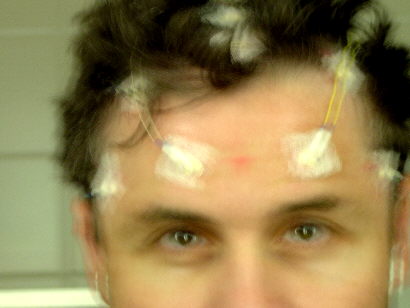
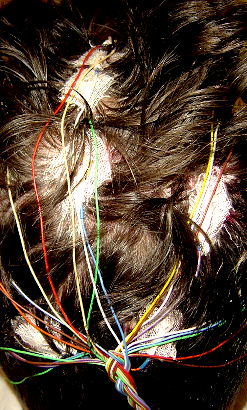
    I broke my brain. I’m not shitting you. It was joggled around in some giant, anonymous pair of hands and tossed end-over-end, without hope or desperation, down a scarred velvet table in a dark and nearly empty casino.

    Have you ever felt like a moth that has been pinned to a post and is being swarmed by thousands of vague and terrifying lights? Has it ever seemed like you’ve been locked inside an old bank safe that has a rusty and long forgotten combination and then been flung into the Mississippi River on a moonless night?

    For many days now I have had a lost thought rolling around like a marble greased with gore in the back of my skull.

    You realize, of course, that I’m not kidding. I’m one of those guys who doesn’t tell the jokes unless I mean them.

    It’s not sleep that I occasionally, and increasingly rarely, find in the long hours after midnight, but something more…I don’t know, really, sleepish, is I guess the best I can do in describing it. Utter sleeplessness that lapses from time to time into weird, yet oddly merciful little spells of sleepishness.

    This is what I am.

    And I have decided that I want to take the idea of talking birds much further than anyone has ever taken it before, to explore the language of birds in the history of literature, music, and art, to get to the bottom of this queer and preoccupying business once and for all.

    I realize that I have, from time to time, gotten carried away with similar such quixotic pursuits. There was the time, for instance, when I was determined to make this…blog a portal for all manner of exhaustive scholarship regarding Calvin Coolidge, the thirtieth President of the United States. I honestly thought that I could –that I would– become the world’s most preeminent Coolidge scholar.

    Little did I realize at the time, however, that Coolidge was such a thoroughly boring character.

    I have some reason to feel optimistic that my parrot project will be much more fruitful. No particular reason, really, but some reason, and that, at this point, is something.

    I have spent the last week or so assembling some preliminary notes on my exhaustive cultural study of parrotology, and will in all likelihood continue to work away at this long and ongoing project in this space. At the moment, at least, I am taking as my models for this compendium Walter Benjamin’s Arcades Project, Robert Burton’s Anatomy of Melancholy, and Isaac Disraeli’s Curiosities of Literature.

    For now I would ask your patience and beg your pardon for the disorderly nature of these notes and ruminations. What you have here is a both a crude document and a portrait of one man alone in the wee hours, fumbling his way into a vast and, in all likelihood, inexhaustible project. I would welcome any assistance or suggestions that might point me in potentially fruitful new directions.

    We need another and a wiser and perhaps a more mystical concept of animals. Remote from universal nature, and living by complicated artifice, man in civilization surveys the creature through the glass of his knowledge and sees thereby a feather magnified and the whole image in distortion. We patronize them for their incompleteness, for their tragic fate of having taken form so far below ourselves. And therein we err, and err greatly. For the animal shall not be measured by man. In a world older and more complicated than ours they move finished and complete, gifted with extensions of the senses we have lost or never attained, living by voices we shall never hear. They are not brethren, they are not underlings; they are other nations, caught with ourselves in the net of life and time, fellow prisoners of the splendor and travail of the earth.

    Henry Beston, The Outermost House. 1928


    Psittalinguistics: the science of talking parrots.

    A parrot, it has been alleged, was responsible for planting many of the more heinous perversions in the head of one of the most depraved of the Caesars, Tiberius, this after the bird had had read aloud to him (by a sociopathic dwarf tutor in the Caesar’s employ) from an early and particularly pernicious primer in lechery. (See: A. Towson Dandridge, The Psychology of the Tyrants of Antiquity, Stanhope and Adelman, Manchester. 1949.)

    We also learn, in Dr. Renata Steenblom’s Unnatural Nature (University of Winnipeg, 1963), of a parrot which was allegedly capable of divining –and divulging at inopportune moments– the innermost secrets of its mistress, including sexual fantasies of a shockingly explicit nature. The bird was notorious for regaling unsuspecting visitors with a tortuous impression of the poor woman’s whinnying orgasm.

    According to Fr. Xavier Empson’s Curiosities of Catholicism and Marvels of Mariolotry (Eternal Image Press, Skokie, Illinois. 1957), there was, once upon a time, a parrot belonging to a tavern owner in a small village in Italy, and this bird was renowned for its ability to recite the Rosary (in Latin) in its entirety. One day, Empson recounts, the bird solemnly proclaimed, "It is the will of God, and I am but His humble servant," and promptly fell over dead.

    From the pages of the children’s magazine, Highlights, we learn of an unassuming insurance adjustor and confirmed bachelor in Dallas, Texas who purchased a blue-fronted parrot which, upon being installed in the man’s home, was discovered to have committed a number of Johnny Cash songs to memory. The bird was capable of singing these songs in their entirety, and in a passable impersonation of the country legend’s voice.

    The annals of parrotology are full of similar wonders, from the ancient world to the modern. In a little known short story by the Russian writer, Gogol, a bird is called upon to testify in a court of law as a material witness to its master’s infidelity.

    There is an obscure novel, Lucifer’s Bird, by a Depression-era Georgia writer by the name of Ernest Winter, which featured a talking parrot that was believed to be possessed by Satan. The bird’s sinister commands and insinuations lead a God-fearing local deacon to engage in acts of depravity that shake a small southern town to its core. William Faulkner reportedly attempted a screenplay of this novel for Charles Laughton, but there is apparently no surviving evidence of this aborted project.

    In the days before teleprompters one often heard stories of Catskill comedians in their dottage who resorted to being fed their lines by parrots, which were perched on stage in full view of the audience. One such bird was said to be such a quick-witted master of improvisation that in time it became an actual and valued partner to the comedian. Before it eventually passed away from advanced years (the bird survived the old comedian by more than a decade), the parrot had established itself as a successful solo act –if something of a novelty– in its own right.

    The legendary blues musician Skip James is another performer who was alleged to have used a parrot as a prompt, often, some accounts allege, after James had become so inebriated that he could no longer remember the words to his songs.

    There was a minor dust-up in academia in the 1950s when a man named J. Richard Stevens published portions of his doctoral dissertation in a then reputable scholarly journal. Stevens’ thesis, which was immediately and loudly discredited, was that a number of Emily Dickinson’s poems had been almost literal transcriptions of the utterances of her beloved parrot, Desdemona.

    In the early days of television, talking birds were often used to provide voiceover narration for advertisements, largely in an attempt to cut costs and circumvent union restrictions. The practice apparently continues –albeit somewhat clandestinely– to this day, most prominently in the dubbing of low-budget films from Asia.

    The debate over animal cognition: Dr. Irene Pepperberg’s famous gray parrot, Alex. Dr Pepperberg’s pioneering studies with Alex proved conclusively that the prevailing and disparaging notion of a "bird brain," is grounded in ignorance. Many birds –parrots most particularly– have very large brains indeed, and possess a cognitive sophistication that is as wondrous as it is little understood. Dr. Pepperberg’s work with Alex is almost as important and influential as the better known work on animal communication and referential speech that has been conducted on the great apes.

    The Yellow Naped parrot, the most virtuosic and versatile of the Amazonian talking parrots, can often master an impressive vocabulary of upwards of eight hundred words, and is also capable of singing, dancing, whistling, and doing uncanny impersonations of animals and household appliances.

    Double Yellow Head parrots have long been recognized as accomplished opera singers, with extraordinary range. They are among the more excitable and motor-mouthed of talking birds. (See: Robert T. Nicolai, Caruso in a Cage: The Incredible True Story of Sergei, the World’s Most Famous Singing Parrot, Bristol House, 1983.)

    Budgerigars have been known to have vocabularies in excess of one thousand words. One such parrot, Victor, purportedly demonstrated that birds are capable of engaging in actual conversation, and was alleged to be an influential teacher and mentor to many other birds. Victor, according to its owner, presided over a de facto academy for talking birds, and a lexicon of the parrot’s impressive vocabulary, along with an archive of its recordings, can be found here.

    N’Kisi, a New York parrot with an almost 600-word vocabulary and psychic abilities, is purportedly capable of reading the thoughts of visitors.

    See also: Bruce Thomas Boehner’s Parrot Culture: Our 2500 Year Fascination With The World’s Most Talkative Bird.

    More audio recordings of talking birds.

    There have been innumerable documented cases of talking parrots thwarting robberies.

    Other literary examples:

    Eudora Welty’s The Shoe Bird

    Flaubert’s "Un Coeur Simple." (See also: Julian Barnes, Flaubert’s Parrot)

    Somewhere in the works of Balzac (and I have thus far been unable to find the source of this story, although I maintain a clear memory of it nonetheless) there is a parrot that recites "The Lord’s Prayer."

    There is also, of course, the foul-mouthed parrot in Errol Stanley Garner’s, The Case of the Perjured Parrot.

    More recently: Joe Coomer’s The Loop, which features a home invasion by an elderly parrot given to cryptic utterances.

    In the seventh century, Shui Shi Tu Jing published the Book of Hydraulic Elegancies. Indeed, one continually finds descriptions of such technological wonders as mechanical flying doves, dancing apes, and talking parrots in the literatures of Islamic nations, India, China, and Greece. In fourteenth century Florence, it was none other than Filippo Brunelleschi who designed a mechanical stage to bring Paradise to life.

    –Oliver Grau, "History of Telepresence: Automata, Illusion, and Rejecting the Body."


    This defect or imperfection that stands in the way of man’s communicating with animals, why isn’t it as much our fault as theirs? For we don’t understand them any more than they understand us.

    Montaigne, "Apology for Raymond Sebond"


    Yet the animals are not incapable of being taught also in our way. Blackbirds, ravens, magpies, and parrots we teach to speak; and that facility with which we see them rendering their voice and breath so supple and manageable for us, to form and constrain it to a certain number of letters and syllables, testifies that they have an inward power of reason which makes them so teachable and determined to learn.

    Montaigne, "Apology for Raymond Sebond"


    This story of the magpie, for which we have Plutarch himself as sponsor, is strange. She was in a barber’s shop in Rome, and did wonders in imitating with her voice all that she heard. One day it happened that certain trumpeters stopped and blew a long time in front of this shop. After that and all the next day here was this magpie pensive, mute, and melancholy, at which everyone marveled, and thought that the sound of the trumpets had stunned and deafened her, and that her voice had been snuffed out together with her hearing. But they found in the end that it was a profound study and a withdrawal within herself, while her mind was practicing and preparing her voice to represent the sound of these trumpets; so that the first voice she used was that one, expressing perfectly their runs, pitches, and variations; and for this new acquirement she abandoned and scorned all she had learned to say before.

    Montaigne, "Apology for Raymond Sebond"


    An old Danish shipowner sat and thought of his young days and of how he had, when he was sixteen years old, spent a night in a brothel in Singapore. He had come in there with the sailors of his father’s ship, and he had sat and talked with an old Chinese woman. When she heard that he was a native of a distant country she brought out an old parrot, that belonged to her. Long, long ago, she told him, the parrot had been given to her by a high-born English lover of her youth. The boy thought that the bird must then be a hundred years old. It could say various sentences in the languages of the world, picked up in the cosmopolitan atmosphere of the house. But one phrase the old China-woman’s lover had taught it before he sent it to her, and that she did not understand, neither had any visitor ever been able to tell her what it meant. So now for many years she had given up asking. But if the boy came from far away perhaps it was his language, and he could interpret the phrase to her.

    The boy had been deeply, strangely moved at the suggestion. When he looked at the parrot, and thought that he might hear Danish from that terrible beak, he very nearly ran out of the house. He stayed on only to do the old Chinese woman a service. But when she made the parrot speak its sentence, it turned out to be classic Greek. The bird spoke its words very slowly, and the boy knew enough Greek to recognize it; it was a verse from Sappho:


    The moon has sunk and the Pleiads,

    And midnight is gone,

    And the hours are passing, passing,

    And I lie alone.

    The old woman, when he translated the lines to her, smacked her lips and rolled her small slanting eyes. She asked him to say it again, and nodded her head.

    Isak Dinesen, Out of Africa

    hospital bible girl 6.jpg

    hospital 22.jpg

    hospital bible girl 3.jpg

  • How I Spent My Summer Vacation, And: Some Things I've Decided My Hypothetical Parrot Might Say

    hospital 11.jpg

    hospital bible girl 7.jpg

    hospital balloon.jpg

    Pay attention.

    Let it be.

    Say exactly what you think, and what you mean.

    Stop pretending it’s so damn hard to be human.

    Show your teeth to God.

    Do what you can.

    Every time you notice the stars –and I hope you’ll notice them often– I want you to think of me alone in this cage in the darkness, pounding away at my cuttlebone.

    Relax, it’s just like dancing.

    The truth, by whomever it is spoken, is from the Holy Spirit.

    I can but wonder whence I get the lasting sense of so much warmth and light.

    Yum, yum.

    Lucky, lucky man.

    Thank you.

    Bless you.

    Sweet dreams.

    hospital-scalp.jpg

    hospital food 2.jpg

    hospital 25.jpg

  • The Decaying System

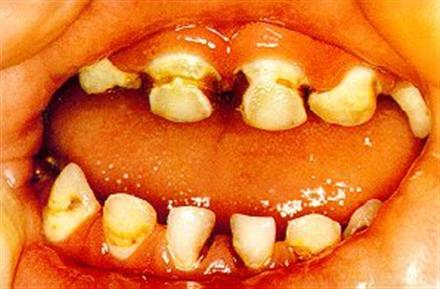
    teeth (Custom).jpg
    There are a few gaps in our health coverage.

    I went to the dentist this morning for my semi-annual cleaning and check up. Sometimes I go 8 or 9 months between, mostly because of my schedule and his. But I always go eventually, and sooner, rather than later. I’m glad I can afford it.

    I had a quack dentist when I was a kid, and he made things a lot worse for me in my middle age. Luckily, the dentist I have now is excellent, although not cheap. I estimate it’s cost me about $20,000 over the last 15 years to repair the damage wrought by too many sweet cereals and that earlier charlatan.

    Just last night I was reading the latest New Yorker. Among the dearth of Target ads this week was a story by Malcolm Gladwell, one of my favorite New Yorker writers, and the author of The Tipping Point and this year’s Blink.

    The story starts with a clinical, albeit horrid, description of the beginning of tooth decay, they segues into a description of our health care system in the United States. Gladwell does a particularly good job of scrubbing away the faulty logic that those who would keep things as they are use to maintain their advantage.

    Read it. Then floss. Then think about the sort of country we live in where the executive of the local health care giant makes over $100 million per year, and over 40 million Americans have no chance to protect themselves from physical and financial ruin under our current system.

    The brush and floss again to see if you can get the taste out of your mouth.

  • Down Pat

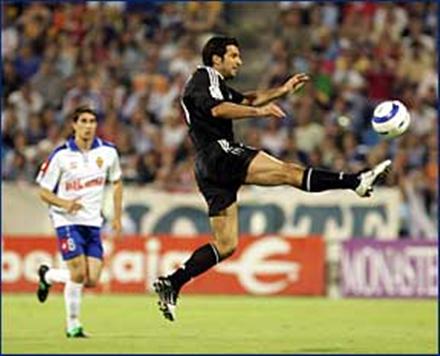
    futbol (Custom).jpg
    THIS is football

    Everyone who’s got a brain, and there are damn few of us left, is not even that upset about Pat Robertson’s calling for the assasination of Hugo Chavez. That sort of boorish behavior by Americans is pretty old news, after all.

    In case you haven’t been paying attention, Robertson and his ilk are all for the revival of that odd mixture of overt theocrats and covert murderers who once dominated Latin American politics.

    Yup, let’s overthrow the legally elected government of Venezuela. After all, it worked so well for us in Chile. (Remember Pinochet? He’s the one now being tried for crimes against humanity.) And how about El Salvador, where our boys murdered Bishop Romero while he was saying mass, raped and murdered a van full of American nuns, and dragged 12 Jesuit priests out of their beds one morning and shot them all in the head? All that in the name of putting a stop to godless Communism (today, read godless Islam.)

    Of course, most of the victims were Catholic Christians, instead of the good ol’ American Evangelical Christians, so they probably had done something to deserve it, such as speaking out against the army’s murdering of the campesinos…or, even teaching them to read.

    But, I didn’t want to belabor this. What I did want to belabor is something I read about in the Sunday Strib sports section. This was a story about the assault of some American pro football players who pissed off the wrong Germans.

    It seems a bunch of American football players went into a Dusseldorf club, didn’t receive the adulation they are used to getting on First Avenue, spit on a bouncer, and left. To nobody’s surprise, except the Americans’, the Germans didn’t like this much and responded with clubs and various other weapons.

    Duh.

    I’ve spent some time in Germany. I’ve lived in Italy and Spain. And, if there’s one thing I’ve learned for certain, it’s that 98 percent of all American tourists walk around these countries as if they owned them. Most make no attempt to speak the language at all, not even to the point of learning that beer is cerveza and wine is vino. Or that please is por favor, per favore, or bitte. Not that hard.

    But, we’re used to being the big dogs with the dollars. It hasn’t sunk in yet that the Euro is galloping ahead of the dollar in value every day. This, thanks to our government’s assumption that we’re too big to actually pay our own way in the world and that everyone else will gladly lend us the money we’re too decadent to tax ourselves to pay for the Iraq war. When we act like the big shots we think we are, the home towners somehow resent that Americans don’t even seem to acknowledge that they aren’t in Kansas any more.

    In contrast, I’ve never been treated rudely in a foreign country. (Well, almost never. I have been to Paris.) But I can order beer in five languages and can carry on a conversation about football (the kind you actually play with your feet) in two and a half.

    Strangely, people seem to respond nicely when you are making an effort to understand them, instead of getting pissed off when they don’t undertand you.

    When you call yourself football players, or call for killing their president, they somehow find that rude. Go figure.

  • Istanbul, Turkey

    Annie, a student at Wheaton College, in front of the Blue Mosque in Istanbul, Turkey.

    By Annie Belz

  • Sweet Spot

    Stepping off the light-rail train at Minneapolis’ Midtown/Lake Street station, you’re surrounded by a menagerie of pastel glass panes, seemingly hovering in midair on the elevated platform. For a tiny second, it feels as though you’re exiting the famed El in Chicago, though this station is newer and tidier than any stop on the Loop—the pavement isn’t yet pocked with black chewing gum. Elevators and concrete stairwells dump riders onto a streetscape that is at first reminiscent of the Jersey turnpike, but varied urban life bustles just a few steps beyond the Hiawatha off-ramps. To the west, there’s the Midtown YWCA and a host of thrift stores, like Savers and the ReUse Center. To the east lies a cluster of ethnic restaurants and big box retailers.

    With the train came the expectation of change to this stretch of Lake Street, which has a sprawling, gritty feel. So far there’s not much evidence of upscaling, or even the addition of a newsstand. (Aren’t all train stops supposed to have newsstands?) In 2006, however, the Lake Street Reconstruction Project promises more greenery (already, trees and a grassy walkway have been added to the Hi-Lake shopping center), as well as attractive pedestrian light fixtures, all to improve the intersection’s curb appeal. Nevertheless, it’s hard to imagine this neighborhood becoming posh.

    On the contrary, this is a stubbornly practical, economically accessible place. Most of its shopping centers were planted in the 1950s and sixties and, despite various cosmetic improvements, look it. Everywhere, families are out acquiring the necessities of life. From the light rail, as well as the 21A bus line, mothers and children stream toward Target and Rainbow Foods. They cross vast parking lots, and pass Schooner’s Bar, before swooshing through automatic doors.

    What’s most unique about Hiawatha and Lake is the way in which its malls interplay with smaller storefronts and restaurants—not to mention the varied ethnic mix of patrons. From the Cub Foods parking lot, just across from the Target parking lot, you can see the rainbow-colored flag soaring above Patrick’s Cabaret, a longtime venue for performance artists of every stripe. Nearby, the East African Gift Shop and Grocery is stocked with injera bread as well as Laffy Taffy. And along 27th Avenue, lined up one after the other, there is La Casa de Samuel Mexican restaurant, Midori’s Floating World Café (a sushi and tea bar), Curves for Women, and Al Qudus Halal Meat and Grocery.

    Back at the train station, an African-American woman chases her daughters—both braided and pigtailed, one in her Girl Scout khakis—toward the platform. A teenager lugs his BMX bike up the stairs. An elderly Asian man, his canvas bag bursting with groceries, opts for the elevator. Within two minutes, north- and south-bound trains whisk them all away, depositing a new cast of eclectic Lake Street characters in their place.—Christy DeSmith

  • Show & Tell

    It’s hard to explain—it was just something I slid into,” said Andy Rempel. He was describing his job as a fashion stylist, which is akin to defining style itself. After all, what is style? Rempel offered an explanation. “I think of it as playing with ideas of what’s appropriate and expected,” he said. “You twist things, not to offend, but just to have fun. Maybe you have a gown that’s appropriately appointed with jewelry, and then the shoe is a little off. Maybe it’s the color or height, but it’s something to make the whole look a little awkward, uncomfortable—not normal.”

    His own ensemble on a recent steamy day was a good example. He had paired standard Gap cargo shorts with a cream-colored football jersey, notable for its Playboy logo, layered over a pale blue T-shirt. And his shoe—a louche version of a loafer from Dolce & Gabbana, in brown leather and denim patchwork, worn sans sock—did indeed make the outfit. It was an astute mix of upscale, average, and downmarket. Naturally, Rempel has his favorite boutiques, but he also loves thrift stores. His favorites are Everyday People, the Unique and Savers thrift stores in Columbia Heights, and the Goodwill in Roseville.

    Ultimately, Rempel said, style is a matter of fit, both with one’s personality and one’s body. “Especially here in the Midwest, women need to take a good look at their bodies and figure out what works.” He targeted ill-fitting bras as the most common fashion faux pas among women: “Ladies need to run, not walk, to the closest good lingerie department and get properly fitted!” In general, women buy clothing that’s too tight, but Rempel also sees slender types in baggy sweatshirts who “think tight clothing is sexual, which it doesn’t have to be.”

    As a tip to avoid potentially regrettable purchases, Rempel recommends getting opinions from other shoppers, not friends or sales clerks. “A friend doesn’t want to hurt your feelings, but strangers who aren’t trying to make a sale—they’ll tell you the truth.”

    There was one last, mystifying issue Rempel was able to clear up. Who pays full price? He smiled. “A lot more people than you think.”

    —Julie Caniglia

  • We're Holding Our Own

    The autumn moon looks too far away, an amber porch bulb draped in a tattered shroud of moths, all but a handful of stars faded into the weave. Buoyed up on the breath of the lake, frail whispers of wood smoke foretell the winter. Out on Superior the lights of a freighter ride the horizon.

    It’s disquieting the way those distant lights sometimes just wink out. One moment you’re tracking them, the next they’re gone—extinguished by a wave, by the arc of the earth, a trick of the eye. Cabin light thins out over the landscape. Ship lights simply disappear. “Damn it, Marlee, slow down,” Pete shouts, smacking his club of rolled-up newspaper hard into his palm.

    It’s obnoxious, actually, the way she plunges ahead like a twelve-year-old on a school picnic, bounding over ankle-breaking rocks in the dark as if this were a warm and sandy beach, disregarding the headlong cliff and the bone cold water below.

    “Hurry up,” she shouts back, skimming across the stones, a growing bundle of dried sticks cradled in her arms.

    Out beyond the sheltering curve of light from the cabin window, he’s feeling his way, each foot holding out for an oath of stability before committing to every new step.

    “Marlee, wait for me,” he shouts after he’s lost sight of her. “I don’t know this place well enough.”

    “I’m right down here, Pete,” she laughs, suddenly there, below. Her voice lingers above the tiny sparking of her lighter.

    “Hurry up, let’s get this fire going. I’m chilly.”

    Hand on foot, she guides him down a mossy rift in the rock face.

    Down here Superior thrums hard against her granite cup. Down here the bedrock flows in solid continuation of the waves. Down here the stone is smoother, forever giving itself to the water.

    In the week following the funeral, in the days of sheltering love, the shore stayed warm long after the sinking of the bloated August sun. It cradled their bodies while she wept, while he held her and tasted her tears, while embers burned to cinders and the lake eased away the hard edges of her sorrow.

    “You’d better treat my daughter right, Peter,” Marlee’s father said one translucent morning last spring when he still knew who Pete was, when he still recognized his own daughter.

    “Or I’ll climb out of this bed and kick your ass.”

    The two men shared a laugh. Pete knelt beside Carl, held his hand, and gave his promise.

    “Give me the newspaper,” she says, crouching over her little teepee of sticks, sparking the lighter beneath the cup of her hand.

    “I still remember the first time we came here,” he says, grinning, crouching down beside her, caressing her leg.

    “Give me the newspaper,” she says. “I’m cold.”

    “Have a sip of whiskey. It’ll warm you.” He presses his flask into her hand.

    Orange tendrils flicker around brittle black paper—a tiny storm rising under a canopy of twigs— then smolder and die.

    “More paper.” She drops her lighter at his feet. “Get it blazing.”

    “Take a drink. It’ll warm you up.”

    “That’s a dangerous myth,” she says, drinking, wiping her lips.

    Another miniature thunderstorm expires on the stone, despite high hopes and heroic blowing. Smoke disappears into the lake’s misty breath.

    “What really happens is your blood vessels dilate, and your heat escapes more quickly. You feel warmer only because all your body heat is right up at the surface.”

    Superior is awfully deep. The bottom is tiled with a thousand broken vessels. Some are still sinking into the shifting sand. One night they broke up on the rocks, or burned, or welcomed in the water. Then they went under like coffee cups in the sink. Some just disappeared. A few have never been found.

    The toothless mouth of night draws tight around the shore. Behind another tip of the flask, Pete peers up toward the cabin with its golden glowing window, bathtub, fireplace, big soft bed. The newspaper all burned up, the night growing damp and chill, Pete sparks the lighter against blackened bark again, again, then lays it to rest.

    “Let’s go back, Mar,” he says. “I don’t think this is turning out so well. I’m getting cold. We can make some coffee.”

    “We’ll warm each other up,” she whispers, turning a girl’s face to his and kissing his jaw. “I’m not ready to go back,” she says.

    Shirt and shoes in a damp little heap, Marlee lies stripped on the cold stone. Pete kneels beside her, laying his hands on her trembling body. Over the dark edge beside them, Superior pounds at the shore.

    “Treat my daughter right,” her dad had warned. Under different circumstances Pete would be pleased to oblige, but right now the rocks are cold and hard on the knees, and it’s beginning to drizzle.

    “I really don’t think this is going to work out, Mar.” His eyes are dry, beginning to burn. “Let’s go in.”

    “I just want a fire, baby.” She shivers, alone.

    “Let’s go back to the cabin.” He rises to his feet and offers his hand.

    “We’ll get a fire going in the fireplace. The bed is nice and soft. Come on, I’ll warm you up enough to last a lifetime.”

    She sits up, elbows on bare rock, grief darkening her face. “I’m not going back.” She’s crying now.

    “I need to be out here. Why can’t you give me that, Pete? Stay out here with me.”

    Marlee drops her head back over the edge and offers salt tears to the lake. The porch light moon is gone. Pete can’t see her face, but he can feel her body shudder.

    “I’m not sure this is going to work out, Mar,” he says beneath the hush, hush, hush of the lake.

    Sometimes there is no squall, no crashing waves. It just works its way silently in, and the cargo soaks it up. Nothing to notice except you’re riding a little bit lower. Nobody recognizes how serious it really is. Then something shifts, and Superior claims you, and you’re just another coffee cup at the bottom of the dishpan.